
 By
By Most people who get into forensic science will tell you the same thing: the job looks nothing like what you saw on television. There is no dramatic music when you find a fingerprint. You log it, bag it, document it, and wait for the lab. That patience and strict adherence to process are central to forensic work. And in India right now, people who have that training are genuinely needed.
Cybercrime units are understaffed. Private forensic audit firms are hiring. Insurance companies want people who can investigate fraud properly. Food and drug labs need qualified analysts. The demand is real, and it is growing in states like Chhattisgarh too, not just in metro cities.
So if you are looking at forensic science colleges in Chhattisgarh, this guide is meant to help you figure out what to actually look for, not just which name sounds good.
Why picking the right college matters more in this field
In most subjects, a weak college can be partially compensated by self-study. Forensic science is not one of those subjects. You cannot teach yourself fingerprint comparison without the right powders, surfaces, and supervision. You cannot learn toxicology sample handling from a YouTube video. The lab time is the education, and if the lab is not there, neither is the degree, practically speaking.
This is something students sometimes figure out only after joining. They get through three years, sit for a state FSL exam or a private lab interview, and realise the questions are practical, not theoretical. The candidate next to them who spent time actually running tests is in a completely different position.
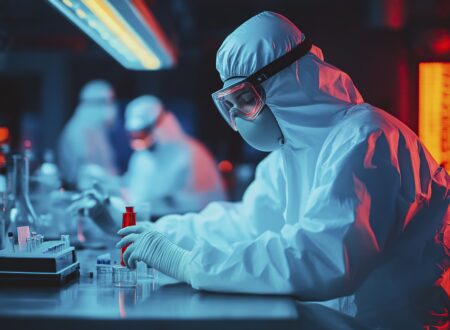
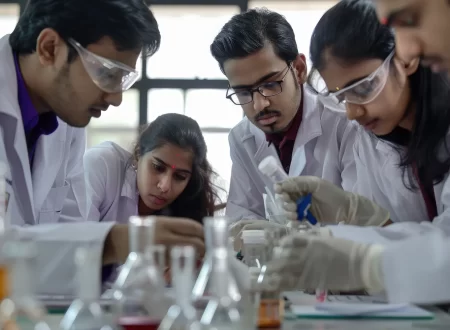
So before anything else, when you look at forensic science colleges in Chhattisgarh, check whether the labs are real. Look for dedicated forensic facilities rather than relying solely on shared laboratory infrastructure. Actual dedicated setups for fingerprinting, questioned document examination, ballistics, serology, toxicology. Ask to see them if you visit. Colleges with good infrastructure will show you without hesitation.
Also check the faculty. Teaching forensic science well requires someone who has done it, not just studied it. Look for faculty with FSL backgrounds, police training experience, or hospital-based forensic work. It makes a difference in how the subject gets taught and what kind of industry exposure the college can actually arrange.
Internships matter here more than in most fields. Ask specifically whether the college has any tie-ups with state forensic science laboratories, district hospitals, or police training academies. A college that cannot answer that question clearly probably does not have them.
Why studying forensic science in Raipur specifically makes sense
Raipur is not just the capital of Chhattisgarh on paper. It is where the courts are, where the state FSL operates, where the main government hospitals function, where the police headquarters sits. For a forensic science student, that proximity is genuinely useful.
A lot of what you need to understand in this field, you understand by seeing it. Watching how evidence is handled at an actual crime scene. Observing medico-legal procedures through appropriate hospital/forensic exposure at a government hospital. Visiting a working forensic lab and seeing how case samples are processed. These are not things any classroom can replicate, but they become possible when your college is located somewhere that has the institutions to support them.
When comparing forensic science colleges in Raipur, ask not just what the curriculum says but how the college actually uses the city. Does it take students to the FSL? Does it have hospital tie-ups for medico-legal exposure? Does it bring in people from the police or judiciary for sessions? The answers to those questions tell you more than any brochure will.
Anjaneya University’s forensic science programme is built to use Raipur’s location properly. The Anjaneya University forensic science lab facilities are part of the regular course, not something students get access to only in the final year.
What the best forensic science colleges in Chhattisgarh should actually cover
One thing that catches students off guard is how broad forensic science actually is. It is not one subject. It pulls from biology, chemistry, law, psychology, and now increasingly from computer science and digital investigation. A programme that treats it as a single narrow track is going to leave gaps.
The Anjaneya University forensic science curriculum is built around this breadth. Crime scene investigation, forensic serology, fingerprint and questioned document analysis, toxicology, and cyber and digital forensics are all part of the course. That last one is worth paying attention to. Digital forensics is where a significant amount of new hiring is happening right now. Cybercrime cells, banks, IT security firms, private investigation companies all need people who understand how to recover and analyse digital evidence. Students who come out with even foundational exposure in this area have a noticeably easier time finding work.
The programme also uses case-based learning through the course, not just at the end of it. Students work through mock investigations where what they studied in a chemistry session gets applied to a scenario the same week. That rhythm, theory followed immediately by application, is closer to how the actual job works.
Full details on subjects, eligibility, and intake are on the Anjaneya University B.Sc. Forensic Science admission page.
Forensic science career options after this degree
People ask this constantly, and it deserves a straight answer.
Government forensic science labs at the state and central level hire FSL analysts and assistants through competitive exams. These are stable, structured roles and they are the first target for most forensic graduates.
State police departments hire forensic-trained officers for crime scene work, evidence handling, and preliminary analysis at investigation sites.
DNA and serology labs, both government and private, need people for identity testing, paternity work, and biological analysis in criminal cases.
Forensic science career options in digital forensics are currently the fastest-growing area. Private sector hiring here comes from IT security companies, banks, fraud investigation firms, and specialized cyber units. If you have digital forensics training, you have options that purely lab-focused graduates do not.
Hospitals and medico-legal units need forensic toxicologists for drug and poison testing in case-related work.
Courts, banks, and legal firms need document examiners for handwriting and signature verification.
Experienced graduates also move into forensic consulting and expert witness work, particularly after five or more years in a core role.
For those who want to go further, an M.Sc.in Forensic Science can support progression into specialized, research, teaching, and advanced technical roles, especially in cyber forensics and forensic psychology. The Anjaneya University postgraduate forensic science programs page covers what that pathway looks like.
What employers actually look for
Beyond the subject knowledge, the things that come up repeatedly when forensic employers describe what they want in a candidate: proper understanding of chain-of-custody procedures, ability to write reports that can hold up in court, hands-on experience with relevant instruments, and some familiarity with digital forensics tools even for non-digital roles. These are not things you pick up from lectures. They come from lab time, supervised practice, and working through real case scenarios during your degree.
Making a decision between forensic science colleges in Chhattisgarh
Chhattisgarh has options for forensic science education, but they are not equal. The infrastructure gap between colleges is significant, and it shows up in how graduates perform once they are actually in the field.
Raipur gives you access to the institutions that matter in this career. The question is whether the college you choose is actually using that access or just located near it.
Anjaneya University’s forensic science programme is designed around practical exposure from the start, coursework that includes digital forensics alongside the core disciplines, and a clear path to the kinds of roles graduates actually end up working in.
For course details and how to apply, visit the Anjaneya University Forensic Science course page. For admission queries, the Anjaneya University admissions inquiry page is the right place to start.
FAQ
1. What should I look for in a forensic science college in Chhattisgarh?
Dedicated labs for fingerprinting, document examination, ballistics, serology and toxicology, faculty with real FSL, police or hospital experience, and internship tie-ups with forensic labs and hospitals.
2. Why is Raipur a good place to study forensic science?
It has the state FSL, courts, government hospitals and police headquarters, so students can get real exposure to evidence handling and medico-legal work.
3. What does a good forensic science programme cover?
Crime scene investigation, serology, fingerprint and document analysis, toxicology, and cyber and digital forensics, taught with case-based learning throughout.
4. What careers can I pursue after a forensic science degree?
Government FSL roles, state police forensic work, DNA and serology labs, digital forensics, hospital toxicology, document examination, and later consulting or expert witness work.
5. What do employers look for in forensic graduates?
Knowledge of chain of custody, court-ready report writing, hands-on instrument experience, and basic digital forensics familiarity.