 By
By It is interesting how libraries, something we used to imagine as quiet rooms filled with wooden shelves, are now transforming inside Indian colleges. The shift has been gradual, then suddenly fast. Some students barely notice it, while others see it happening every day.
A diploma in library science, which many once considered a very traditional path, is becoming strangely modern again, but in a way that feels practical and almost necessary.
People often talk about education going digital, but the library segment rarely gets the same attention. Yet, in the background, everything from cataloguing to archiving is moving to servers, databases, and cloud based systems. This transition has opened up a new space for students who want a stable and evolving career.
There is a quiet rise of digital libraries across Indian campuses. Not every college announces it loudly. Some just upgrade a few computers, some start buying e journals, and others create an entire digital ecosystem.
The idea is simple. Students want faster access, teachers want better organization, and institutions want to keep up with national academic standards. It all adds pressure on library operations and creates demand for trained professionals who understand both books and digital tools.
That is exactly where a structured program like a diploma in library science fits in, although many discover its relevance only when they see how modern libraries actually function today.
How Digital Libraries Became Such a Big Part of Indian Colleges
If someone asked ten years ago whether Indian colleges would shift to digital libraries so quickly, many would have disagreed. But things changed for several reasons.
Students, especially those juggling part time learning or competitive exam prep, prefer digital access because it saves time. Colleges slowly started subscribing to e resources and giving students login credentials for remote access. What sounded advanced earlier soon became normal.
Government initiatives like the National Digital Library of India pushed institutions to align with new learning environments. The pandemic years also accelerated this shift. When campuses were closed, digital libraries became the only reliable academic resource for many students. Colleges that had previously treated digital access as optional suddenly began treating it as essential. Even after classrooms reopened, the convenience of digital materials stayed. It was not a trend; it became part of the learning culture.
Along with this shift, college librarians also had to upgrade their skills. They started dealing with e book platforms, plagiarism software, online cataloguing systems, digital indexing, and automated circulation modules. The work changed shape.
This evolution explains why a diploma in library science is not about just shelving books anymore but about understanding how information moves and how students interact with knowledge.
What Skills Matter in Modern Library Roles
Modern library jobs require a blend of soft and technical skills. Some of these skills existed before, but now they appear in new forms. Classification remains essential, but the tools used are often software driven. Cataloguing is still done, but indexing digital files requires different logic.
Students pursuing information management roles now need to understand metadata structure, digital archiving principles, and basic troubleshooting of library software.
Here are a few skills that colleges often look for in library staff today:
- Familiarity with library automation systems like Koha or SOUL
- Knowledge of e-resource management
- Indexing and metadata tagging
- Basics of digital preservation
- Research support and data retrieval
- User assistance for online library portals
These skills help colleges handle large volumes of content, especially research papers, journals, and digital books. Many institutions hold subscription licenses for academic content providers, and someone must manage them efficiently.
Despite all the digital transformation, one thing remains unchanged. Students still look for people who can guide them in finding the right sources. That human element has not disappeared.

How Digital Libraries Influence Student Learning
When libraries go digital, students get more freedom. They are not tied to library timings. Many campuses now allow online access for students late at night, especially engineering and management students who prefer studying in flexible hours.
For research scholars, digital archives save enormous time. Instead of scanning through stacks of journals, they can filter results in seconds.
Digital libraries also widen the scope of reading. Students suddenly have access to resources from across the world. A college in a small city can offer the same journals used in large institutions. This reduces academic disparity and improves learning quality.
Teachers also benefit. They can share reading lists, link references directly, or assign digital material in classrooms. The system becomes more integrated.
However, the shift also introduces a need for proper curation. Without guidance, students may feel lost. This is why trained professionals are becoming essential inside campuses. Colleges cannot simply buy software and expect everything to run smoothly. They need people who can manage the workflow. That’s why a diploma in library science has become prominent
Digital Library vs Traditional Library
| Feature | Traditional Library | Digital Library |
| Access | Fixed hours | 24×7 remote access |
| Resources | Printed books, journals | E books, databases, digital journals |
| Space Requirement | Large physical space | Minimal physical space |
| Search Process | Manual search | Quick keyword search |
| Maintenance | Physical upkeep | Software management |
| User Convenience | Limited to campus | Accessible anytime, anywhere |
This comparison helps students understand why digital libraries are becoming the backbone of Indian colleges and why institutions require people trained in both old and new systems.
Career Opportunities in Modern Library Science
Students who complete information management courses often wonder where they can work. In reality, opportunities are wider than most expect.
Digital libraries are not limited to educational institutions. Corporate offices, IT companies, research centers, government departments, and media organizations all require structured information systems.
Some common career roles include:
- Library Assistant
- Digital Library Technician
- Documentation Officer
- Information Assistant
- Cataloguing Specialist
- Knowledge Resource Executive
- Archivist
These roles vary in responsibility, but most require familiarity with digital management tools and an understanding of how users search for information.
FAQ Section
- Are digital libraries replacing traditional libraries in India?
Not entirely. Traditional books are still valued. Most colleges follow a hybrid model that balances physical resources with digital access. - Is studying library science still relevant today?
Yes, because information management has expanded. Colleges, companies, and research institutions need trained professionals who understand digital tools. - What software should library students learn?
Koha, SOUL, Greenstone, and other automation systems are important. Many colleges prefer candidates who already have basic familiarity with these tools. - Do digital libraries reduce librarian jobs?
Not at all. They change the nature of work but increase the need for skilled professionals who can manage digital systems. - Where can someone with a diploma in library science work?
Schools, colleges, universities, research centers, government institutions, and private organizations with document management needs.
Anjaneya University and Its Diploma in Library Science Course
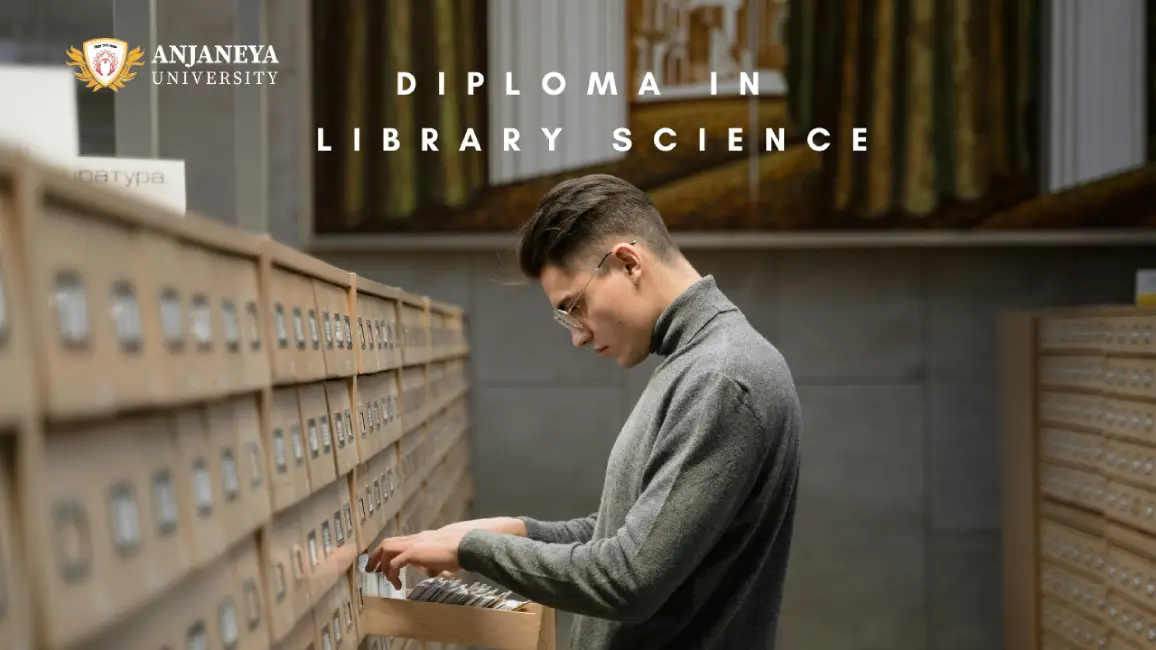
Toward the end of all this discussion, one thing becomes very clear. Students need programs that prepare them for both physical library operations and digital library environments. Anjaneya University offers a course that aims to bridge this gap.
The curriculum blends traditional subjects with modern tools. Students get exposure to cataloguing methods, classification systems, library automation software, e resource management, and digital archiving techniques.
The university has set up a modern learning space where students can practice these skills, not just study them in theory. It is a balanced program for learners who want a stable career path in a field that is transforming quietly but steadily across Indian institutions.