 By
By Food has always mattered. But not in the way it does now. Earlier, eating habits were mostly routine. Home food. Fixed timings. Less questioning. Now people pause. They read labels. They argue about carbs. Someone always mentions sugar. Or protein. Or gut health.
This change did not happen suddenly. It built up over years. Lifestyle problems increased. Medical bills went up. Advice online became confusing. Somewhere in between, nutrition stopped being a side topic and became central.
That is where a Diploma in Nutrition enters the picture. Not as a glamorous qualification. Not as a shortcut to fame. But as a structured way to understand food, health, and the body without committing to a long medical path.
What a Diploma in Nutrition Actually Teaches You
A lot of students assume nutrition courses are about calorie charts and diet plans. That is only a small part. This diploma focuses on how the human body responds to food. What nutrients do. Why deficiencies happen. Why some diets work for one person and fail for another.
You study food in a functional sense. Not ideal food. Real food. The course also introduces basic diet planning, community nutrition, food safety, and the connection between lifestyle diseases and eating habits. It is practical in intent, even if theory forms the base.
You do not come out as a clinical expert. You come out informed. Aware. Capable of making sense of health conversations.
Duration and How the Course Usually Runs
Most institutes offer this course for six months to one year. Some compress it. Some spread it out. The learning style is not uniform everywhere. In many colleges, it includes classroom sessions, written work, basic case discussions, and sometimes field exposure. Internships depend entirely on the institution.
The pace is not aggressive. That is why working professionals and students from non-science backgrounds manage it without feeling lost. It is a course you absorb gradually. Not one you rush through.
Eligibility Criteria and Entry Requirements
One reason this diploma attracts such a mixed group of students is eligibility.
Most colleges ask for:
- Completion of 10 plus 2
- Any stream accepted in many cases
- Basic academic documentation
Some institutions prefer science students. Others do not insist. You will often see students who studied commerce or arts doing just fine. Interest matters more than background here. If someone expects instant results without effort, the course feels dull. If someone is curious, it opens up slowly.
Subjects Covered During the Program
The Diploma in Nutrition syllabus changes slightly from college to college, but the foundation remains similar.
Students usually study:
- Basics of human nutrition
- Macronutrients and micronutrients
- Food groups and balanced diet concepts
- Nutrition for children, adults, and elderly
- Introduction to diet therapy
- Public and community nutrition
- Food hygiene and safety
Some topics feel familiar. Others challenge assumptions. Many students realise midway that a lot of what they believed about food was incomplete or simply wrong. That realisation is part of the learning.
Skills That Develop
By the end, most students are able to:
- Read food labels properly
- Understand nutrient composition
- Identify unhealthy eating patterns
- Plan simple, balanced meals
- Communicate basic nutrition advice
- Understand lifestyle disorders from a food perspective
Many also notice personal changes. Eating habits improve. Awareness increases. Conversations around health become clearer. That alone makes the course useful for many.
Why Nutrition Courses Are Being Taken More Seriously Now
The demand is not driven by trends. It is driven by necessity. Lifestyle disorders are showing up earlier. Diabetes, obesity, hormonal issues, and digestive problems. People want non medical ways to manage daily health better.
At the same time, wellness has become an industry. Gyms. Yoga studios. Corporate wellness programs. Community health initiatives. All of them need people who understand food beyond surface level advice. This diploma fits into that space.
Career Options After Completing the Course
Career outcomes depend on expectations. This qualification usually leads to entry level roles, not senior positions. Growth comes later.
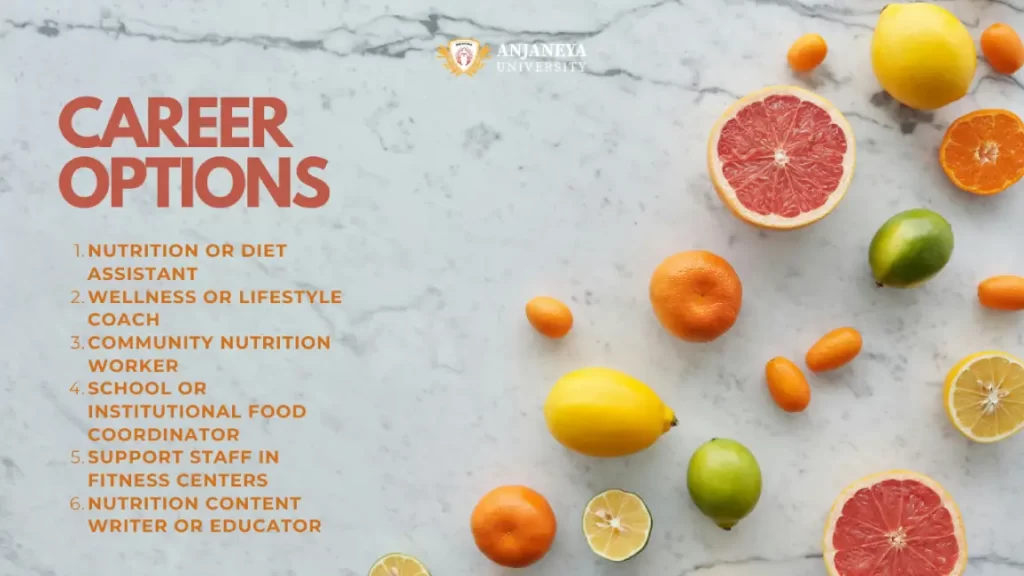
Common roles include:
- Nutrition or diet assistant
- Wellness or lifestyle coach
- Community nutrition worker
- School or institutional food coordinator
- Support staff in fitness centers
- Nutrition content writer or educator
Some graduates also work independently, but most start under supervision. That phase matters. It builds credibility.
Diploma Versus Degree in Nutrition
This comparison often comes up late, sometimes too late.
A diploma is designed for:
- Shorter study duration
- Practical exposure
- Lower academic pressure
- Faster workforce entry
A degree focuses on:
- Deeper scientific study
- Clinical or research roles
- Long term academic progression
Many students use the diploma as a test phase. It helps them decide whether nutrition is something they want to pursue seriously or apply alongside another profession.
Who This Course Works Best For
This path suits people who:
- Want structured nutrition knowledge
- Prefer applied learning
- Are interested in health and wellness
- Do not want long medical courses
- Plan to work in fitness or community health
- Want to build nutrition awareness professionally
It may not suit those chasing instant financial returns. It suits those thinking long term.
Further Study Options After Completion
The diploma does not end the journey.
Many students continue with:
- Advanced diploma in nutrition or dietetics
- Degree programs in nutrition or food science
- Sports nutrition certification
- Public health nutrition courses
Each step adds depth and professional acceptance.
Common Questions Students Ask
Is a science background compulsory?
No. Many institutes accept all streams.
Can I work independently after the course?
Yes, but experience matters. Starting under guidance is common.
Is this course recognised everywhere?
Recognition depends on the institution. Always verify accreditation.
Can this lead to higher studies later?
Yes. Many students progress academically.
Is age a barrier?
Usually no. Working professionals enroll often.
About Anjaneya University’s Diploma Program in Nutrition
Anjaneya University offers a Diploma in Nutrition focused on applied learning and real-world relevance. The course is structured to help students understand nutrition fundamentals, food safety, and lifestyle-related health issues without overwhelming academic pressure.
The program is suitable for students from different educational backgrounds and places emphasis on practical understanding rather than rote learning. With a balanced curriculum and supportive academic environment, the university positions the program as a starting point for careers in wellness, health education, and community nutrition.